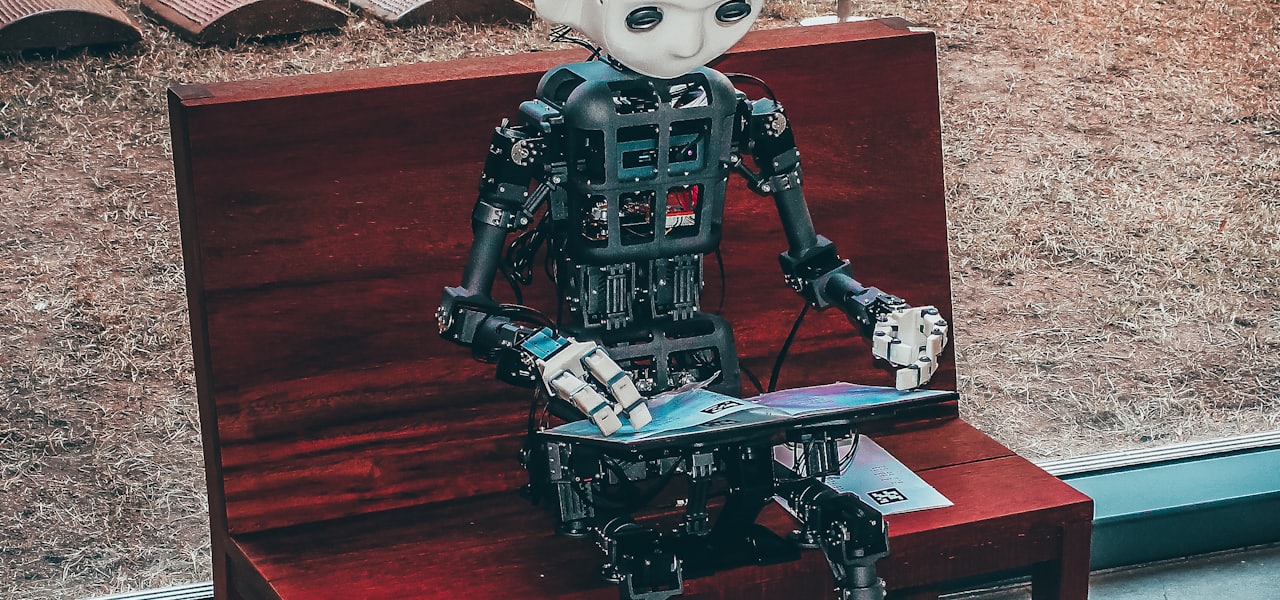
Trying to pick the best AI coding assistant? An AI coding assistant is software that uses machine learning to help you get more done — it scales effortlessly from a single task to thousands. The best picks balance beginner-friendly simplicity with the depth power users need, and they ship updates often. Whether you are a beginner or a pro, the right AI coding assistant slots into your workflow and pays for itself fast. Read on for hands-on impressions, pricing tiers, and the standout features that matter.
Tapingo
Tapingo was an American mobile commerce application that offers advance ordering for pickup and food delivery services for college campuses. The company was acquired by Grubhub in September 2018 for approximately $150 million. Following the acquisition, Tapingo’s campus-ordering functionality was integrated into the Grubhub app (Grubhub Campus Dining) and the Tapingo service was discontinued during 2019. Tapingo is differentiated from other on-demand delivery/logistics companies, such as Waiter.com, Postmates, or DoorDash, by focusing its efforts on serving the college market. Through Tapingo, users can browse menus, place orders, pay for the meal and schedule the pickup or have it delivered. On certain campuses, students are able to use their university's meal dollars to pay for food. In the spring of 2012, Tapingo first launched its services on five campuses (Santa Clara University, Loyola Marymount University, Biola University, the University of Maine, and California Lutheran University), and has since expanded to more than 200 college campuses across the U.S. and Canada, serving 100 markets. To date, Tapingo has received venture funding from Carmel Ventures, Khosla Ventures, Kinzon Capital, DCM Ventures and Qualcomm Ventures. In fall 2015, Tapingo announced expansion plans through major partnership deals with national brands like Chipotle Mexican Grill and 7-Eleven, regional restaurants such as Taco Bueno, and global foodservice provider Aramark.
Supreme Commander (video game)
Supreme Commander (sometimes SupCom) is a 2007 real-time strategy video game designed by Chris Taylor and developed by his company, Gas Powered Games. The game is considered to be a spiritual successor, not a direct sequel, to Taylor's 1997 game Total Annihilation. First announced in the August 2005 edition of PC Gamer magazine, the game was released in Europe on February 16, 2007, and in North America on February 20. The standalone expansion Supreme Commander: Forged Alliance was released on November 6 of the same year. The sequel, Supreme Commander 2, was released in 2010. Nowadays, the original Supreme Commander is played through the community client called Forged Alliance Forever; the game has been further developed and balanced, and offers a wide variety of community mods. The gameplay of Supreme Commander focuses on using a giant bipedal mech called an Armored Command Unit (ACU), the so-called "Supreme Commander", to build a base, upgrading units to reach higher technology tiers, and conquering opponents. The player can command one of three factions: the Aeon Illuminate, the Cybran Nation, or the United Earth Federation (UEF). The expansion game added the Seraphim faction. Supreme Commander was highly anticipated in pre-release previews, and was well received by critics, with a Metacritic average of 86 out of 100. == Gameplay == Supreme Commander, like its spiritual predecessors, Total Annihilation and Spring, begins with the player solely possessing a single, irreplaceable construction unit called the "Armored Command Unit," or ACU, the titular Supreme Commander. Normally the loss of this unit results in the loss of the game (Skirmish missions can be set for a variety of victory conditions). These mech suits are designed to be transported through quantum gateways across the galaxy and contain all the materials and blueprints necessary to create an army from a planet's native resources in hours. All standard units except Commanders and summoned Support Commanders (sACU) are self-sufficient robots. All units and structures belong to one of four technology tiers, or "Tech" levels, each tier being stronger and/or more efficient than the previous. Certain lower-tier structures can be upgraded into higher ones without having to rebuild them. The first tier is available at the start of the game and consists of small, relatively weak units and structures. The second tier expands the player's abilities greatly, especially in terms of stationary weapons and shielding, and introduces upgraded versions of tier one units. The third tier level has very powerful assault units designed to overcome the fortifications of the most entrenched player. The fourth tier is a limited range of "experimental" technology. These are usually massive units which take a lot of time and energy to produce, but provide a significant tactical advantage. Supreme Commander features a varied skirmish AI. The typical Easy' and Normal modes are present, but the Hard difficulty level has four possible variants. Horde AI will swarm the player with hordes of lower level units, Tech AI will upgrade its units as fast as possible and assault the player with advanced units, the Balanced AI attempts to find a balance between the two, and the Supreme AI decides which of the three hard strategies is best for the map. The single player campaign consists of eighteen missions, six for each faction. The player is an inexperienced Commander who plays a key role in their faction's campaign to bring the "Infinite War" to an end. Despite the low number of campaign missions, each mission can potentially last hours. At the start of a mission, objectives are assigned for the player to complete. Once the player accomplishes them, the map is expanded, sometimes doubling or tripling in size, and new objectives are assigned. As the mission is commonly divided into three segments, the player will often have to overcome several enemy positions to achieve victory. === Resource management === Because humans have developed replication technology, making advanced use of rapid prototyping and nanotechnology, only two types of resources are required to wage war: Energy and Mass. Energy is obtained by constructing power generators on any solid surface (except fuel generators, which can only be built on fuel deposits), while Mass is obtained either by placing mass extractors on limited mass deposit spots (the most efficient method, although it requires map control) or by building mass fabricators to convert energy into mass. Constructor units can gather energy by "reclaiming" it from organic debris such as trees and mass from rocks and wrecked units. Each player has a certain amount of resource storage, which can be expanded by the construction of storage structures. This gives the player reserves in times of shortage or allows them to stockpile resources. If the resource generation exceeds the player's capacity, the material is wasted. On the contrary, if the storages are depleted and the demand of one of the resources exceeds the production, then all the productions speed is reduced. In addition, if an energy deficit occurs, shields will stop working. An adjacency system allows certain structures to benefit from being built directly adjacent to others. Energy-consuming structures will use less energy when built adjacent to power generators and power generators will produce more energy when built adjacent to power storage structures. The same applies to their mass-producing equivalents. Likewise, factories will consume less energy and mass when built adjacent to power generators and mass fabricators/extractors, respectively. However, by placing structures in close proximity, they become more vulnerable to collateral damage if an adjacent structure is destroyed. Furthermore, most resource generation structures can cause chain reactions when destroyed (especially Tier III structures, which produce large amounts of resources but often have large detonations that can wipe out a nearby army). === Warfare === Supreme Commander uses a "strategic zoom" system that allows the player to seamlessly zoom from a detailed close up view of an individual unit all the way out to a view of the entire map, at which point it resembles a fullscreen version of the minimap denoting individual units with icons. The camera also has a free movement mode and can be slaved to track a selected unit and there is a split screen mode which also supports multiple monitors. This system allows Supreme Commander to use vast maps up to 80 km x 80 km, with players potentially controlling a thousand units each. Units in Supreme Commander are built to scale as they would be in the real world. For example, battleships dwarf submarines. Late into the game, the larger "experimental" units, such as the Cybran Monkeylord, an enormous spider-shaped assault unit, can actually crush smaller enemy units by stepping on them. Because of the wide range of planets colonized by humanity in the setting, the theatres of war range from desert to arctic, and all battlespaces are employed. Technologies emerging in modern warfare are frequently employed in Supreme Commander. For example, stealth technology and both tactical and strategic missile and missile defense systems can be used. Supreme Commander introduced several innovations designed to reduce the amount of micromanagement inherent in many RTS games. Engineers units have the command "assist", that will help follow other engineers and help them finish their orders or improve production rate of factories. In addition, engineers with the order "patrol" will repair units, buildings and recycle wrecks in their along their patrol route. Holding the shift key causes any orders given to a unit (or group of units) to be queued. In this manner a unit may be ordered to attack several targets in succession, or to make best speed to a given point on the map and then attack towards a specified location engaging any hostiles it encounters along the way. After orders have been issued, holding the shift key causes all issued orders to be displayed on the map where they can be subsequently modified to accommodate a change of plan. Further, when a unit is ordered to attack a target, the player can issue an order to perform a coordinated attack to another unit. This order coordinates the arrival time of the units at the target automatically by adjusting the speed of the units involved. As in other RTS games, air transports can be used to convey units to specified destinations, in Supreme Commander though by shift queuing orders a transport containing several units can be ordered to drop specific units at subsequent waypoints. An air transport can also be ordered to create a ferry route, an airbridge wherein any land units ordered to the start of the ferry route will be conveyed by the air transport to the specified destination. The output from a production factory can be routed to a ferry route causing all units co
They're Made Out of Meat
"They're Made Out of Meat" is a short story by American writer Terry Bisson. It was originally published in OMNI. It consists entirely of dialogue between two characters. Bisson's website hosts a theatrical adaptation. A film adaptation won the Grand Prize at the Seattle Science Fiction Museum's 2006 film festival. The story was collected in the 1993 anthology Bears Discover Fire and Other Stories, and has circulated widely on the Internet, which Bisson found "flattering". It has been quoted in cognitive, cosmological, and philosophical scholarship. == Plot == The two characters are intelligent beings capable of traveling faster than light, on a mission to "contact, welcome and log in any and all sentient races or multibeings in this quadrant of the Universe." Bisson's stage directions represent them as "two lights moving like fireflies among the stars" on a projection screen. One of them tells the incredulous other about the recent discovery of carbon-based lifeforms "made up entirely of meat". After conversing briefly about it, they both deem such beings and communication with them too bizarre and agree to "erase the records and forget the whole thing", marking the Solar System "unoccupied". == Film adaptations == === They're Made out of Meat (2005) === In 2005, Stephen O'Regan wrote and directed a live film adaptation starring Tom Noonan and Ben Bailey. The film was made as a final project for the New York Film Academy. The main action takes place inside a diner full of teenagers in Staten Island, New York. The music for the film was scored by Bob Reynolds. === They're Made out of Meat (2010) === Jeff Frumess and Trevor Scott produced a version in 2010. They added the character of a homeless conspiracy theorist with an original score by musician Sam Belkin. The film was shot at Hartsdale station in Westchester County, New York. === Meat (2021) === Masha Maksimova developed a version in Cinemiracle format, a triple split-screen process, as a student project at the Berlin University of Applied Sciences in the communication design course. The dialogue is conducted by two telepathic humanoid aliens and the thoughts are visualised by found-footage collages.
2024 Abu Dhabi Autonomous Racing League
On 27 April 2024, the inaugural race of the Abu Dhabi Autonomous Racing League was held at the Yas Marina Circuit in Abu Dhabi. The race, originally scheduled to last eight laps, was ultimately shortened to six laps due to various complications, including subpar performance. It involved four self-driving race cars, only two of which – German cars Hailey and Constructor AI – finished the race; the other two did not finish. == Background == === Abu Dhabi Autonomous Racing League (A2RL) === The A2RL is an autonomous racing championship based in Abu Dhabi and organized by ASPIRE, part of the Advanced Technology Research Council. It is one of two active autonomous car racing championships, the second being the US-based Indy Autonomous Challenge. Unlike the IAC, which primarily focuses on time trials, simulated races, and challenges for teams, the A2RL's car races are closer to a standard grand prix formula race format. Both use Dallara-supplied racecars; the IAC uses the AV-24 chassis derived from Indy NXT's IL-15, while the A2RL chassis is designated EAV-24 and is derived from the SF-23 chassis used in Japanese Super Formula races. === Entrants === In total, eight teams were part of the A2RL in 2024, but only four would compete in the race proper. The list of teams in 2024 is: Fly Eagle (China/UAE) Code19 Racing (United States) Constructor University (Germany) Kinetiz (Singapore/UAE) Humda Lab (Hungary) PoliMove (Italy) Unimore (Italy) Technical University of Munich (Germany) Most teams come from universities and many, such as PoliMove and TUM, already have experience with autonomous racing, primarily from competing in the IAC. All teams had two months to code and test their AIs. Unlike most international open-wheel racing tournaments, such as Formula 1 or Formula E, no free practice sessions were undertaken. === TII Pre-race demonstration === Prior to the race itself, a mock 1v1 duel between former F1 driver Danill Kvyat and a self-driving car from the non-competing TII Racing team took place; the autonomous car was green and had number 01, while Kvyat's car was red and had number 00. Kvyat spent most of the duel in the pits. Kvyat himself said: "I'm not racing autonomous cars here. It won't be a flat-out race". == Qualifying == === Qualifying report === As only four of the eight entrants would compete in the main event, qualifying time trials were held to determine the four main race competitors, as well as their positions in the grid. Only the cars with the four best lap times over three time trial sessions held on Friday and Saturday would qualify. Multiple errors and setbacks occurred during qualifying. In the first session, Maveric AI, Code19's car, left the track and stopped just after turn 14 due to connectivity issues. Fly Eagle's car, Feiying, had multiple upsets; at one point, Feiying ran into localization issues and began swerving left and right before stopping just before turn 10. Later, Feiying swerved again and nearly hit the wall at the back straight, near the support pits, due to further localization issues. Sparkz, the Kinetiz team's car, swerved and crashed into the wall near yacht berths 51-56 after turn 11, damaging the front right wheel's axle and partially detaching the forward wings. Sparkz would be the only car to not have a set time at the end of the time trials. PoliMove car Eva braked hard without warning at the straight, the LED status indicator turning off, suggesting the AI computer had a system crash or shut itself down. After the sun went down, during the second session, Hailey, the car from the TUM team, went off-track after turn 9 and stopped, its status indicator flashing red, meaning Hailey's AI disengaged itself. Eva had further issues, once again braking hard and spinning out into turn 1. Later, the same thing happened to Feiying; it later swerved left and right and stopped due to further localization issues. The morning after, during the third and final session, Hailey went off-track after turn 5, and were unable to regain the pole position. === Qualifying classification === == Attack/Defend challenge == === Attack/Defend challenge report === In this part of the event, cars would be put on a series of 1v1 duels to see how well they could defend their position or attack to gain one higher. During one such duel, an incident occurred where Hailey rear-ended Eva, sending both off the track and prematurely ending the duel. The challenge was otherwise uneventful. === Attack/Defend challenge results === == Main race == === Race report === Eventually, at around 20:30 Gulf Standard Time on the night of 27 April, the main event (termed the "Grand Final" on-stream) would begin. The starting order was Eva first, Gianna second, Hailey third, and Constructor AI last. The race began with a rolling start. As a safety measure, the first two laps were conducted under virtual safety car (VSC) to make sure the cars stayed together, making them de facto formation laps, even if they counted towards race distance. However, Hailey ended up stopping at the final turn and strayed too far from the cars ahead, and as a result, the VSC conditions were extended for another lap. According to the livestream's on-screen graphics, Hailey was upwards of one minute and 22.3 seconds behind Gianna after the former started moving again. On lap 4, halfway through the planned race, and with Hailey more than 30 seconds behind Gianna, the VSC was lifted, and the green flag finally dropped. At first, the two Italian cars were leading the pack, Eva was the race leader with Gianna 3.2 seconds behind, however, as it entered the chicane, Eva hit the brakes and spun out, with Gianna briefly stopping as it passed Eva. Eva's spin automatically triggered a full-course yellow flag. Normally, under yellow flag conditions, overtaking is not permitted, but with Eva stopped and being moved off the track, it was theoretically permitted to overtake Eva. However, presumably due to an oversight in the AI's code, the cars assumed overtaking Eva, despite being off the track, was not permitted. As a result, both Gianna and Constructor AI stopped as they did not want to overtake Eva due to the yellow flag, with Hailey following suit as it approached. Constructor AI's status indicator was solid red, suggesting the AI had disengaged; however, Gianna's status indicator remained solid purple, showing the AI was still in control. Eva's status indicator was also solid purple, but was soon flashing green, suggesting the AI had disengaged but was ready to take control again. With all cars stalled, and Eva being off the track, the race was effectively red-flagged and suspended. Hailey, Gianna, and Constructor AI drove themselves back to their team's pits; Eva did not, it was towed to the main pits on a flatbed truck. Constructor was the first to arrive at the pits, followed by Gianna and Hailey, in that order. This incident, combined with loss of internet connection, led to Eva retiring - it did not finish the race. Eventually, it was decided to resume the race. With Eva retired, the restart order was Gianna first, Hailey second, and Constructor AI third. The race was also shortened - from eight laps to six. With lap 5 under full-course yellow, this meant all three remaining teams would effectively restart the race on the sixth and final lap. The trio left the pits at 22:25 Gulf Standard Time, and the race resumed two minutes later. At first, Gianna was winning with Hailey 2.6 seconds behind, but then Gianna stopped on turn 5, giving Hailey the lead. Constructor AI also overtook Gianna, but not without briefly stopping. Gianna remained stopped, its status indicator solid red - it did not finish either. With both Italian teams out of the picture, Hailey finished first and won A2RL 2024, with Constructor AI finishing second, 27.2 seconds behind. === Final race classification ===
QANDA
QANDA (stands for 'Q and A') is an AI-based learning platform developed by Mathpresso Inc., a South Korea-based education technology company. Its best known feature is a solution search, which uses optical character recognition technology to scan problems and provide step-by-step solutions and learning content. As of March 2024, QANDA solved over 6.3 billion questions. QANDA has 90 million total registered users and has reached 8 million monthly active users (MAU) in 50 countries. 90% of the cumulative users are from overseas such as Vietnam and Indonesia. In January 2024, its MathGPT, a math-specific small large language model set a new world record, surpassed Microsoft's 'ToRA 13B', the previous record holder in benchmarks assessing mathematical performance such as 'MATH' (high school math) and 'GSM8K' (grade school math). 'MathGPT' was co-developed with Upstage and KT. In March 2024, Mathpresso launched 'Cramify' (formerly known as Prep.Pie), an AI-powered study material generator designed to create personalized exam prep materials for U.S. college students. It uses generative AI to create customized study materials uploaded by students. Its features include a range of tools including study summarizer and question solver. == History == Co-founder Jongheun ‘Ray’ Lee first came up with the idea of QANDA during his freshman year in college. While he was tutoring to earn money, Lee realized that the quality of education a student receives is greatly based on their location. Lee saw his K-12 students were regularly asking similar questions and realized that these questions were from a pre-selected number of textbooks currently being used in schools. He decided to team up with his high school friend, Yongjae ‘Jake’ Lee to build a platform whereby, one uses a mobile app to scan and submit questions, and students can ask and receive detailed responses. Lee's school friends, Wonguk Jung and Hojae Jeong, joined the team. In June 2015, Mathpresso, Inc. was founded in Seoul, South Korea. In January 2016, Mathpresso's first product QANDA was launched. It supported a Q&A feature between students and tutors. In October 2017, QANDA introduced an AI-based search capability that permitted users to search for answers in seconds. In April 2020, Jake Yongjae Lee(CEO & co-founder) and Ray Jongheun Lee (co-founder) were selected as Forbes 30 under 30 Asia. In June 2021, QANDA raised $50 million in series C funding. Jake Yongjae Lee was recognized as an Innovator Under 35 by MIT Technology Review. In November 2021, QANDA secured a strategic investment from Google. Since its inception, it has received backing in Series C funding from investors namely Google, Yellowdog, GGV Capital, Goodwater Capital, KDB, and SKS Private Equity with participation from SoftBank Ventures Asia, Legend Capital, Mirae Asset Venture Investment, and Smilegate Investment. In September 2023, Mathpresso has raised $8 million (10 billion KRW) from Korea's telecom giant, KT. The total cumulative investment is about 130 million US dollars. The partnership aims to accelerate the development of an education-specific Large Language Model. The company intends to incorporate the LLM model to fortify its AI tutor, which later will be integrated into the existing services: QANDA App, B2B & B2G Saas, and 1:1 online tutoring (QANDA Tutor). == Features == QANDA features OCR-based solution search, one-on-one Q&A tutoring, a study timer. In 2021, QANDA launched additional features, including the premium subscription model that offers unlimited “byte-sized” micro-video lectures and the community feature that enhances collaborative learning. In 2021, QANDA launched QANDA Tutor, a tablet-based 1:1 tutoring service and QANDA Study, a 1:N online school in Vietnam. In 2022, QANDA launched an exam prep feature that offers past exam materials from school via online. This feature is currently available in South Korea. In August 2023, QANDA launched a beta version of an LLM-powered AI Tutor. == Awards and recognition == Best Hidden Gems of 2017 by Google Playstore 2018 AWS AI Startup Challenge Award National representative for the Google AI for Social Good APAC, 2018 Best Self-Improvement Apps of 2018 by Google Playstore GSV Edtech 150 — the Most Transformational Growth Companies in Digital Learning Speaker at the Google App Summit, 2021 Selected as a prospect unicorn company by Korea Technology Finance Corporation in 2023 Winner of G20-DIA Global Pitching in 2023 2021, 2022, 2023 East Asia EdTech 150 by HolonIQ
Amazon Bedrock
Amazon Bedrock is a cloud computing service provided by Amazon Web Services (AWS) for building generative artificial intelligence applications. Launched in 2023, the platform provides a unified API to access foundation models (FMs) from several AI companies, alongside related tools. Bedrock is a serverless computing service which competes with similar enterprise AI platforms such as Microsoft Foundry and Google Cloud Platform. == History == Amazon announced Bedrock on April 13, 2023. The service became generally available on September 28, 2023. Throughout 2024 and 2025, AWS expanded the service to include AI agents, which allow models to interact with external systems. == Features == Knowledge Bases: a managed workflow for Retrieval-Augmented Generation (RAG), which allows models to pull facts from private data stored in Amazon S3. Guardrails: a security feature that allows administrators to set content filters and personally identifiable information redaction across all models in the platform to increase the safety and compliance of AI deployments. == PartyRock == In November 2023, Amazon launched PartyRock, a web-based no-code environment for building generative AI applications. The platform uses a natural language interface to translate user descriptions into software widgets. These widgets enable specific AI behaviors, including text-based prompts, conversational agents, generating images, and the summarization and querying of user-uploaded documents. Although it initially launched with a limited-time free trial, AWS transitioned the service to a recurring free daily usage credit model in early 2025.